
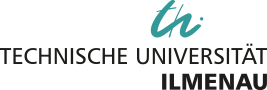
ThIMo is participating in the regional innovation strategy RIS Thuringia.
The Thuringia Regional Innovation Strategy (RIS)—operating under the patronage of the Thuringian Minister for Economic Affairs, Agriculture and Rural Areas (TMWLLR)—focuses on institutionalizing exchange, communication, and knowledge transfer within the Free State’s strategic technology sectors.
On the one hand, the RIS fosters the development of innovative solutions—including those for rural mobility—that serve as the foundation for the subsequent implementation of pilot projects. On the other hand, it generates strategic insights to inform transport policy regarding demographic change, climate change, and the population's evolving mobility needs.
ThIMo is represented on the RIS strategy advisory board for the specialization area "Sustainable and Intelligent Mobility and Logistics" by its director, who serves as an appointed member.
ThIMo is a member of the Thuringian Mobility Network
The Thuringian Mobility Network (TMN)—operating under the patronage of the Thuringian Minister for Digital Affairs and Infrastructure—focuses on institutionalizing the exchange of ideas, communication, and knowledge transfer within the Free State’s mobility sector. On the one hand, the TMN develops innovative solutions—particularly for mobility in rural areas—that serve as the foundation for the subsequent implementation of pilot projects. On the other hand, it formulates strategic recommendations for transport policy regarding demographic change, climate change, and the population's evolving mobility needs.
Ecosystem Mobility 4.0
Open digital foundations for autonomous mobility
The goal is to make autonomous mobility simple, accessible, and widely usable. Ecosystem Mobility 4.0 is shaping the digital foundations for this: open, standardized, and vendor-independent—providing an independent integration platform for the building blocks of future automated mobility.
Shaping the future together—openly and through standardization
Stakeholders from industry, academia, and the public sector are collaborating on reference architectures, standards, and technical components for autonomous, on-demand mobility services.
Connected thinking—realizing mobility holistically
The focus is on a connected mobility ecosystem that enables intermodal and automated services—in both urban and rural areas. This approach fosters solutions that are climate-friendly, socially balanced, and economically viable.
Prof. Matthias Hein (ThIMo) and Prof. Uwe Plank-Wiedenbeck (Bauhaus-Universität Weimar) are actively contributing to implementation as members of two EM 4.0 working groups.
European Digital Innovation Hub EDIH MID GERMANY

European Digital Innovation Hubs (EDIHs) are an EU-funded initiative designed to accelerate the digital transformation across Europe. They assist public and private organizations in testing digital technologies, building skills, and effectively implementing investments.
Realizing the vision of a digital and green European Union requires a collaborative effort involving businesses, public institutions, research bodies, and the creative sector, alongside active citizen engagement. Fostering the development and implementation of innovations demands digital skills, training programs, testing and experimentation facilities, financial support, and interconnected ecosystems. The European Digital Innovation Hub (EDIH) MID GERMANY embodies this vision, offering these services with a specific focus on the mobility and energy sectors. It serves as a regional hub in Central Germany for the digital transformation of both the business community and the public sector. Drawing on interdisciplinary expertise in artificial intelligence applications, high-performance computing, cybersecurity, and digital skills development, EDIH MID GERMANY addresses the key challenges facing a digital European Union. By expanding the active regional innovation ecosystem through a robust EDIH network, it offers potential clients unique opportunities to implement forward-looking digital solutions. EDIH MID GERMANY will boost the region's digital maturity, drive the creation of new digital products and services, stimulate significant private and public investment, and thus play a pivotal role in shaping the digital future.
EDIH MID GERMANY operates a marketplace covering key areas such as mobility and logistics, IT infrastructure and software, construction, energy and resources, tourism, industrial production, and healthcare. It structures its advisory services around four pillars: LEARNING, TESTING, INVESTING, and NETWORKING.
The EDIH MID GERMANY consortium:
Bauhaus-Universität Weimar (consortium leader)
TU Ilmenau (with TZLR and the Thuringian Innovation Center for Mobility)
HighQ GmbH
BPV Consult GmbH
NT.AG
WBA Bauhaus
WeLoveApps GmbH
MOVEwell – Working together for better mobility in rural Thuringia
Against the backdrop of climate change, demographic shifts, digitalization, and security of supply, the needs-oriented and research-based MOVEwell project contributes to future-proof and sustainable mobility. Focusing on a rural region comprising several districts, the project brings together stakeholders, public transport authorities, government agencies, and research institutions to implement effective mobility management in "living labs" and promote transferable approaches. The sub-project focuses on research into automated and connected driving (ACD) and the establishment of a platform to provide scientific support for pilot projects involving highly automated and connected driving in public transport and on-demand services. Human resources—specifically availability and costs—represent one of the major obstacles to introducing new mobility services as alternatives to private car use in rural areas. Consequently, public transport operators and other service providers have high expectations regarding driverless system solutions featuring remote monitoring. At the same time, this technology offers the potential to reduce traffic density and lower traffic-related emissions. The goal is to overcome technological and technical hurdles associated with ACD technologies and prepare them for application, particularly within public transport. Based on the MOVEwell living labs, the project aims to generalize tasks ranging from the assessment of needs and technical parameters—such as transport infrastructure, route planning, and network coverage—to communication regarding technical issues, accompanying social science research, and the evaluation of deployment areas, all the way to concrete support during project initiation. Additionally, the project team handles tasks related to overall project management, governance strategy, and the development of a vision for sustainable mobility.
The MOVEwell consortium:
European Digital Innovation Hub Thuringia at Bauhaus-Universität Weimar (consortium lead)
Thuringian Innovation Center for Mobility at TU Ilmenau
Saalfeld-Rudolstadt District
Arbeiterwohlfahrt Saalfeld gGmbH
Zentralklinik Bad Berka GmbH
Stadtwirtschaft Weimar GmbH
highQ Computerlösungen